
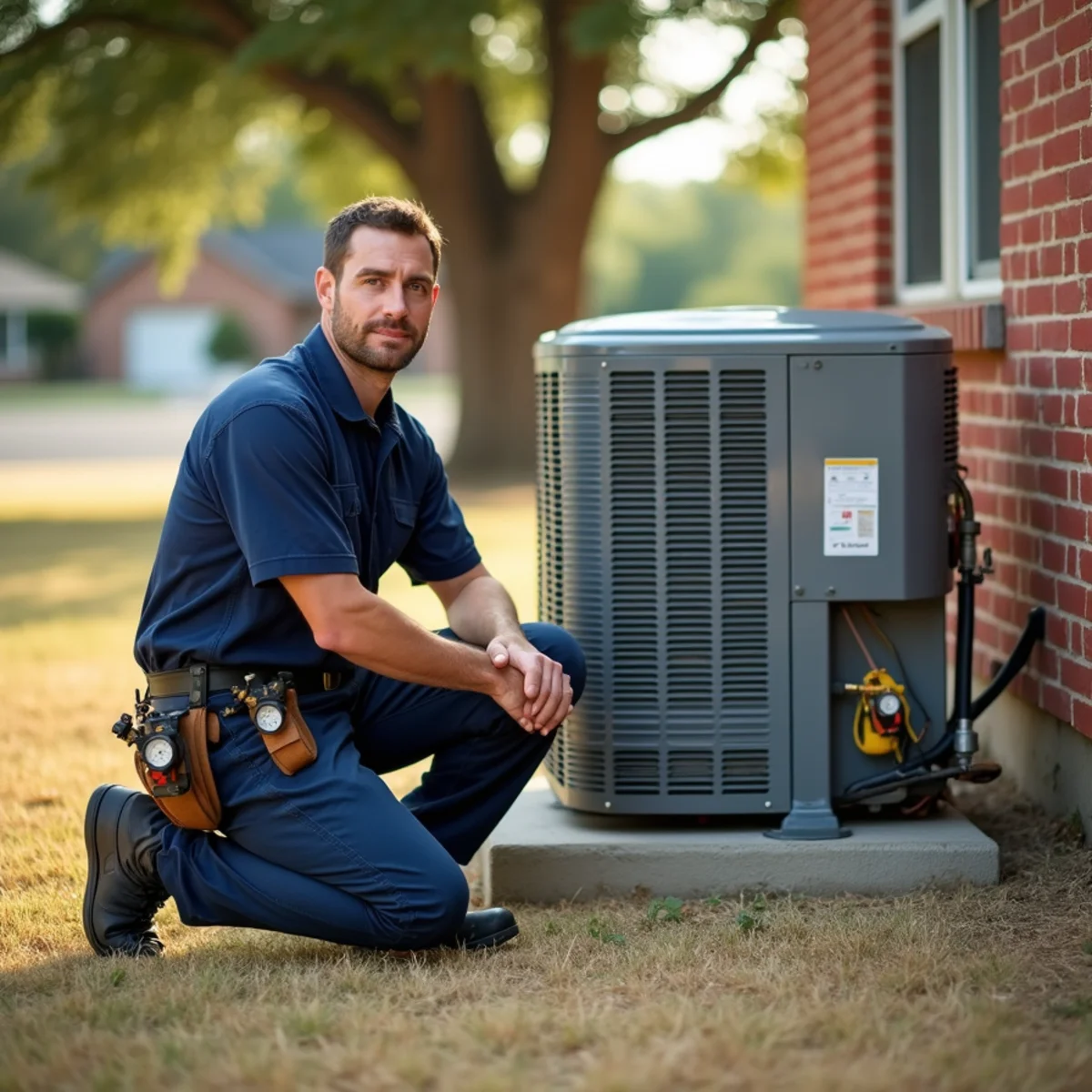
By the Geaux 72 Air & Heat team · Updated
AC repair in Azle, TX starts with a live person answering the phone 24/7. Call (321) 478-0693 and we dispatch the nearest available licensed HVAC contractor to diagnose the system, quote the repair in writing and fix it once you approve. Most air conditioner repair calls here come down to a capacitor, a contactor, a condenser fan motor, a refrigerant leak or a clogged drain.
Azle homes have a median build year around 1987, so most ranch houses between SH 199 and FM 730 are on their second or third system, with an attic air handler and flex duct as old as the house. If yours just quit, run through 7 checks before you call about a dead AC first.
AC problems we fix in Azle homes: warm air, short cycling, frozen coils, water at the air handler
Each symptom has a few usual causes, and every visit starts by separating them with measurements, not guesses.
| What you notice | Likely causes | What you can safely check | What the technician tests |
|---|---|---|---|
| Warm air, outdoor unit running | Leak, dirty condenser coil, weak compressor | Filter; outdoor fan spinning | Pressures, temperature split, compressor amps |
| Outdoor unit humming or silent | Failed capacitor or contactor, seized fan motor | Thermostat on Cool; breaker reset once | Capacitor value, contactor voltage, motor windings |
| Short cycling | Oversized system, low charge, overheating | Thermostat batteries and placement | Run times, pressures, safety trips |
| Ice on lines or coil | Clogged filter, weak blower, low charge | Filter; system Off to thaw | Airflow, static pressure, leak search |
| Water at the air handler | Clogged drain, rusted pan, tripped float switch | Float switch tripped? Photos | Drain flush, pans, float switch |
Two of these need fast action: a frozen coil left running can damage the compressor, and an overflowing attic pan reaches the ceiling within a day. For a house that stays warm while the AC runs, see eight reasons an AC runs but does not cool.
What the noises and the electric bill are telling you
- A steady hum, outdoor fan not turning: the motor has power but cannot start, usually a failed run capacitor or a seized fan motor. Turn the system off; letting it hum overheats the compressor.
- Clicking at the outdoor unit with no start: a contactor that pulls in but does not make contact, or a capacitor that has given out. Pitted contacts and ant nests are common in Azle side yards.
- Grinding or squealing from the condenser top: dry fan-motor bearings. They can go from noisy to seized within days of hard summer use.
- A loud bang or rattle at start-up: a compressor straining against high pressure or a loose component. Leave it off and call.
- A bill that jumps while the house still cools: a dirty outdoor coil, a slow refrigerant leak or leaky attic ducts make the system run longer for the same comfort. It is worth a visit before the first 100-degree week, not after.
The parts that fail first in North Texas heat: capacitors, contactors and condenser fan motors
On a 100-degree afternoon the condenser sits in full sun and runs for hours, and heat wears down every electrical part inside it.
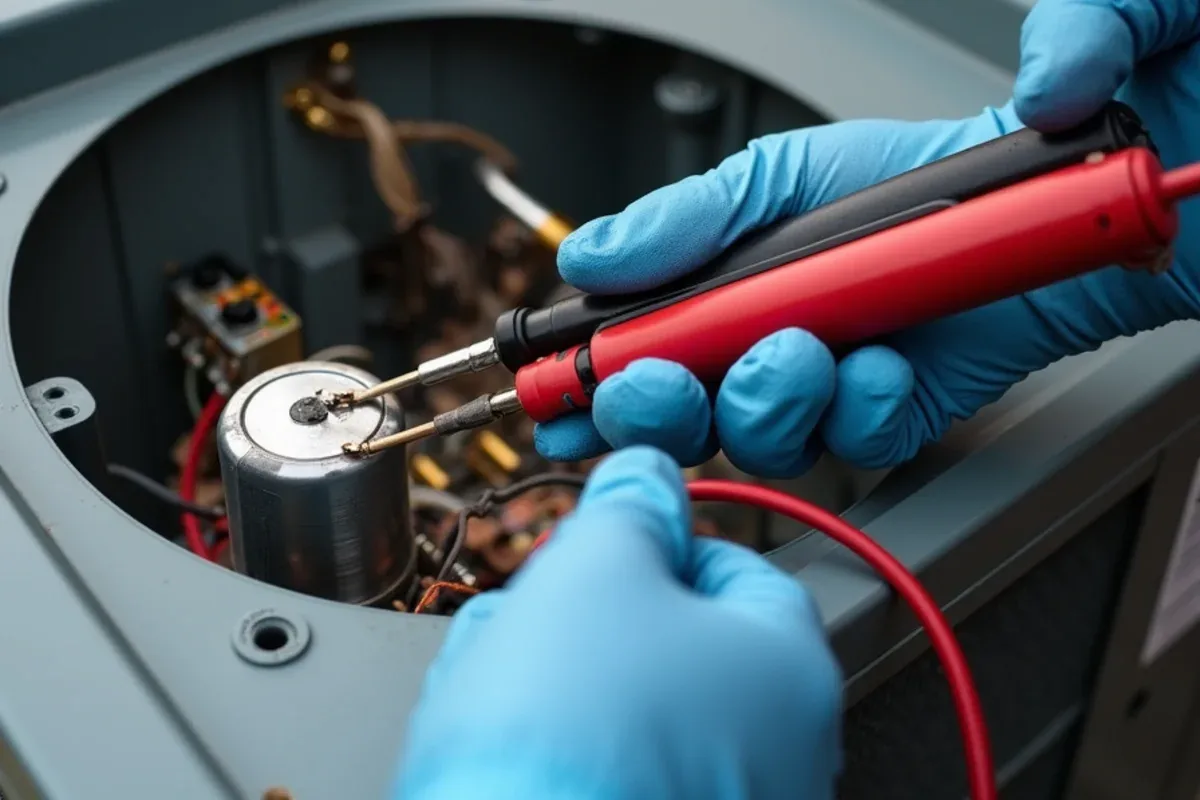
- Capacitors give the compressor and fan the push to start. A weak one causes a hum or a fan that will not spin. Capacitor replacement is one of the least expensive AC repairs, and the technician measures the part rather than judging it by looks.
- Contactors are the switch that starts the outdoor unit. Their contacts pit and stick with age, and fire ants packed between them can stop the unit cold.
- Condenser fan motors shed the coil’s heat. Worn bearings let pressure climb until the system trips on safety, so the motor and its capacitor are often replaced together.
Stay out of the panel. A capacitor holds a charge with the power off, and the contactor carries 240 volts. Your checks stop at the thermostat, the filter, one breaker reset and switching the outdoor disconnect off.
Refrigerant leaks: R-22 and R-410A systems, and what a recharge does and does not fix
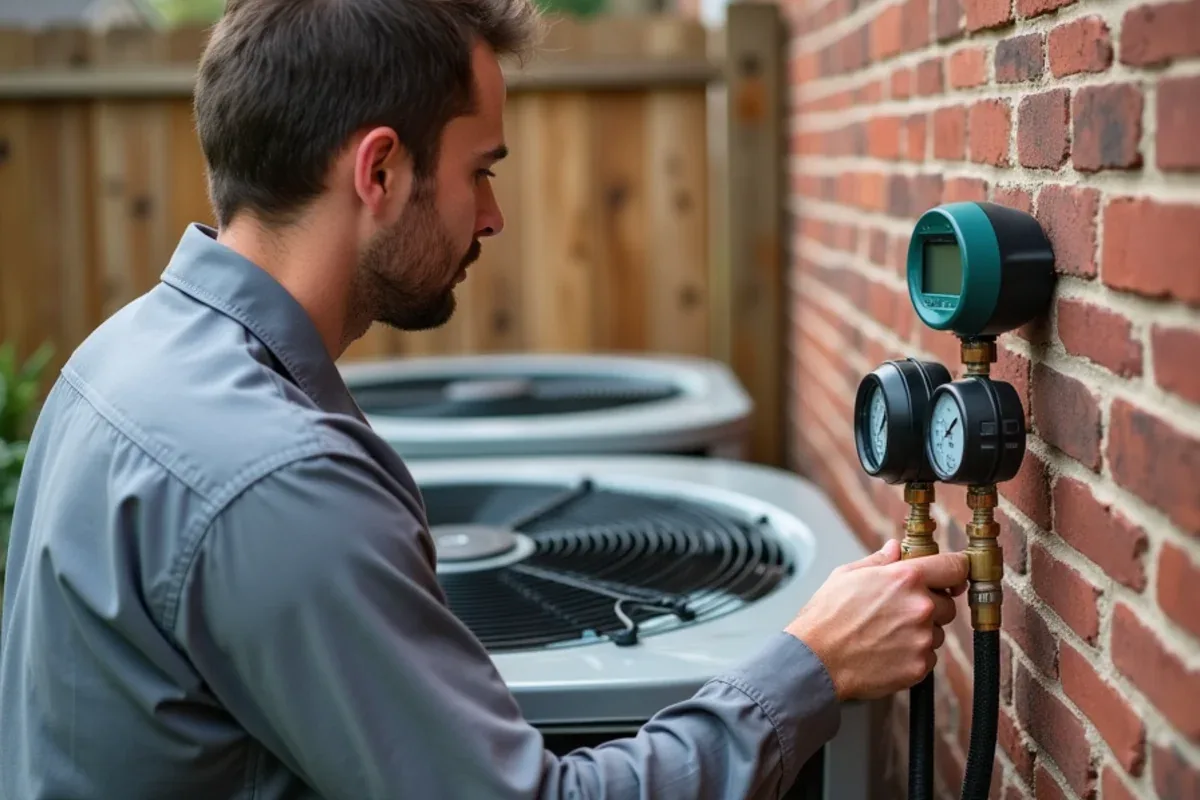
An AC does not use up refrigerant. Low charge means a leak, usually at a brazed joint, a Schrader valve, a rubbing line set or a corroded coil. A recharge without finding it buys weeks, not a repair. Real refrigerant leak repair means locating the leak, fixing it, pulling a deep vacuum and weighing in the charge, work that requires EPA Section 608 certification.
R-22 and R-410A
R-22 production and import ended January 1, 2020, so what remains is reclaimed, scarce and costly. A small leak on an R-22 unit may be worth fixing; a leaking coil on a 20-year-old one rarely is. R-410A systems can keep being serviced, but supply is stepping down under the HFC phasedown as new systems move to R-454B and R-32. Our post on whether to repair or replace an R-22 or R-410A system walks through the decision.
Clogged condensate drains and attic drain-pan overflows
On a humid July day an attic air handler pulls gallons of water from the air and sends it down a PVC condensate line. Algae and dust clog that line and the water backs into the pan. A rusted primary pan, or a float switch that was never wired in, is how a brown ring appears on a hallway ceiling.
- AC off while the thermostat is calling? Look for a tripped float switch, and do not bypass it.
- Water in the secondary pan or a spreading stain? Turn the system off at the thermostat and call.
The fix is usually a line flush, a check of slope and trap, and a new pan or float switch where needed.
What a repair visit looks like: diagnosis, price before work, repair, test
Every air conditioning repair visit runs in this order:
- 1Call. A live person answers (321) 478-0693, asks what the system is doing and confirms timing before dispatch.
- 2Diagnosis. The technician measures capacitor values, voltage, amps, refrigerant pressures and the temperature split across the coil.
- 3Price before work. You hear the cause in plain terms and get a written price. Nothing is replaced until you approve.
- 4Repair. Failed parts are replaced with matching ones, and refrigerant work follows the manufacturer’s charging specs.
- 5Test. The system runs under load while pressures, amps and supply air temperature are rechecked.
Repair or replace? Age, refrigerant type and the size of the repair
A central AC often lasts roughly 12 to 15 years in North Texas heat. The question is what this repair costs against what the system has left.
| Situation | Usually points to |
|---|---|
| Capacitor, contactor or fan motor, any age | Repair |
| Small leak fixed on a younger R-410A system | Repair |
| Leaking coil or failed compressor on R-22 | Replacement |
| Third major repair in two summers, unit past 12 years | Price a replacement first |
| House never cooled evenly, even when new | Check sizing and ducts |
When replacement wins, AC installation and replacement explains sizing and the new refrigerants. Rooms that stay hot no matter what the equipment does often need air duct repair instead.
Why Azle systems work harder: 100-degree afternoons, attic air handlers, cottonwood fluff and mowing dust on outdoor coils
DFW sees around 20 days at or above 100°F in a normal year, and the cooling season runs roughly April into October. The air handler works in an attic far hotter than outdoors, so a loose duct joint costs real capacity. Outside, cottonwood fluff in late spring and mowing dust from big lots mat onto the condenser fins, and spring hail flattens them. A blocked coil drives up pressure, and that is what cooks capacitors and compressors in July. With the disconnect off, you can clear leaves and clippings from around the unit.
What a seasonal AC tune-up catches early
- Capacitors testing low before they fail
- Pitted contactors and heat-browned wiring
- A matted or hail-bent condenser coil
- A slow drain, flushed before it overflows
- Pressures that hint at a slow leak
The North Texas AC tune-up checklist has the full list.
What every AC repair visit includes
- Honest timing before anyone is dispatched
- A diagnosis based on measured readings
- A plain explanation of what failed
- A written price before any repair starts
- The old part shown to you
- A run test under load before the technician leaves
- A straight answer when an R-22 unit is not worth fixing
Why choose Geaux 72 Air & Heat for AC repair
Someone answers at 2 a.m.
(321) 478-0693 reaches a live person 24/7. We never promise an arrival time; we tell you honestly where you are in line.
Licensed and insured
Every HVAC contractor we send is licensed and insured in Texas. You can check any contractor on the TDLR license search.
Price first, repair second
You approve a written price before a part is replaced, and you hear it first when a unit is not worth fixing.
Used to Azle equipment
Attic air handlers, 1990s R-22 condensers, old flex duct and cottonwood-clogged coils are everyday work here.
What affects AC repair cost (and what a seasonal tune-up catches early)
Nobody can honestly price an AC repair by phone, because "not cooling" can be a capacitor or a compressor. The technician diagnoses first and puts the price in writing. A tune-up saves money by catching cheap failures before they take an expensive part with them.
- The failed part. Capacitors and contactors are among the least expensive repairs; compressors and coils among the most.
- Refrigerant type. R-22 is scarce and costly, and R-410A keeps rising.
- Leak location. A Schrader valve is quick; a leaking evaporator coil may need replacing.
- Access. An attic air handler in August takes longer than a closet unit.
- Parts. Common parts ride on the truck; brand-specific boards may need ordering.
- Condition. Corroded wiring and rusted pans on older equipment add scope.
- Timing. Any after-hours rate is stated before dispatch.
We don't publish prices we can't stand behind: you hear the price for your system, from the technician who diagnosed it, before any work starts. More detail: How Much Does AC Repair Cost in Azle, TX?
AC Repair around Azle, TX
Most AC repair calls come from Azle’s ranch streets and newer homes off FM 730, from acreage toward Reno and Pelican Bay, and from lake houses on Eagle Mountain Lake, where humidity and cottonwoods keep coils and drains busy. The same dispatch covers AC repair in Springtown, Lake Worth and Saginaw; see every HVAC service area we cover.